
Stewart County Criminal Court Records
A criminal court record is the court case file, not just the arrest event. In Stewart County, felony criminal records are tied to Superior Court and the Clerk of Superior Court. The case file can include the indictment or accusation, warrant or bind-over material, appearance bond, arraignment, plea, motions, court orders, docket entries, sentencing sheet, probation conditions, fines, fees, restitution, and final disposition. For all court-record types, including civil and probate matters, use the broader Stewart County court records access path.
Georgia's court hierarchy puts Superior Court at the general-jurisdiction trial level. Stewart County is in the Southwestern Judicial Circuit with Lee, Macon, Schley, Sumter, and Webster counties. The Magistrate Court may handle warrant applications and limited criminal matters under Georgia law, while municipal contacts can be relevant for city ordinance or traffic cases. A person reviewing criminal court records should confirm the court first, because a prosecutor's charge, a jail booking record, a VINE custody notice, and a Superior Court disposition answer different questions.
The Stewart County sheriff's county page at stewartcountyga.gov is one official source connected to local criminal records and court process duties.
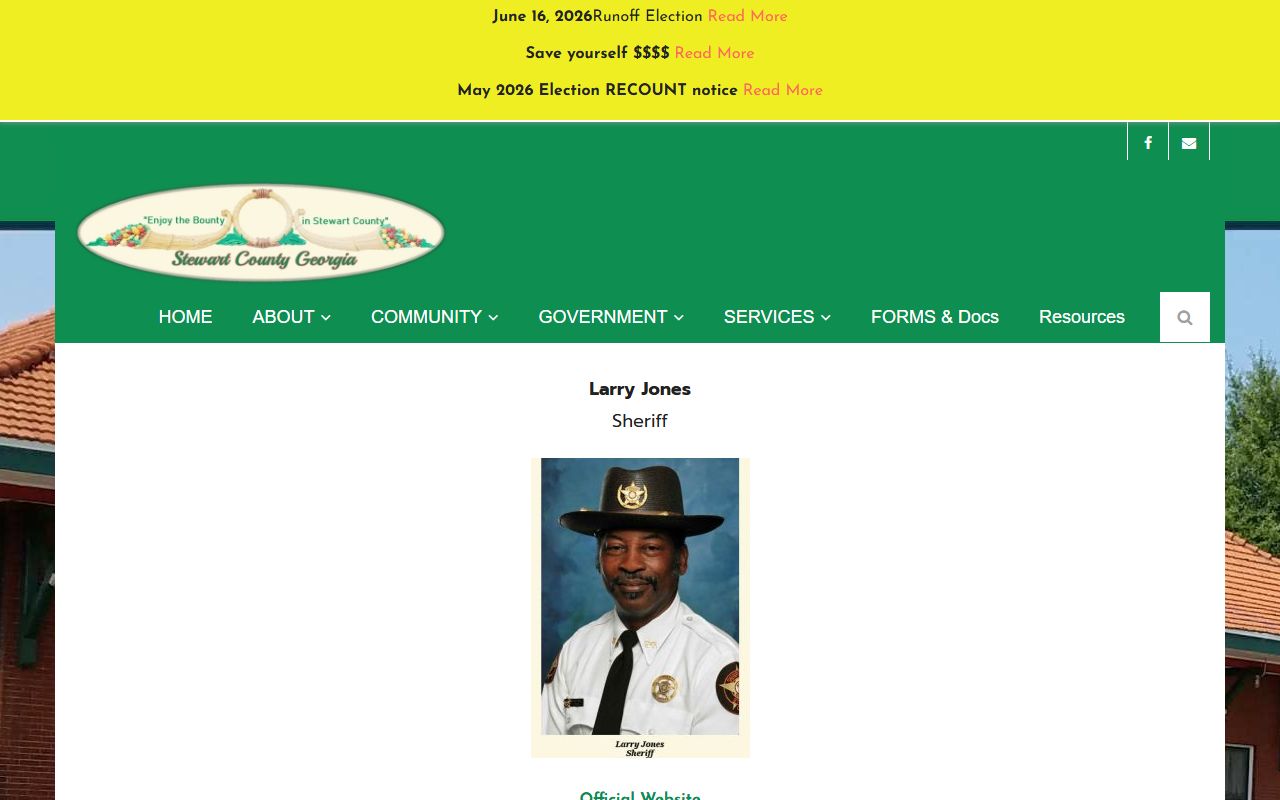
The sheriff context helps explain arrest, service, court process, and jailor duties, but the final criminal court record remains a court and clerk record.
Search Stewart County Criminal Court Records
Start with the Georgia Courts e-access directory for Stewart Superior and the PeachCourt provider route. The public PeachCourt screen shows account registration and court document access, but the post-login criminal case search fields were not visible in the research capture. If the search is blocked by the account requirement, if a certified copy is needed, or if the case is older, contact the Stewart County Clerk of Superior Court. GSCCCA lists the clerk phone as (229) 838-6220 and office hours as 8:00 a.m. to 5:00 p.m. Monday through Friday.
- Confirm that the case is a Stewart County criminal court case, not only a jail booking, warrant, or state-prison record.
- Use Georgia Courts e-access to reach the provider listing for Stewart Superior, then sign in or register through PeachCourt if needed.
- Search with the defendant name, case number, indictment or accusation number, or filing date details when the provider allows those fields.
- Open the docket and review arraignment, plea, motion, hearing, disposition, and sentencing entries before drawing conclusions.
- Request certified copies from the Clerk of Superior Court when a court, agency, employer, licensing board, or attorney needs an official record.
The separate Stewart County Sheriff's Office website is assigned as another successful criminal court records image.
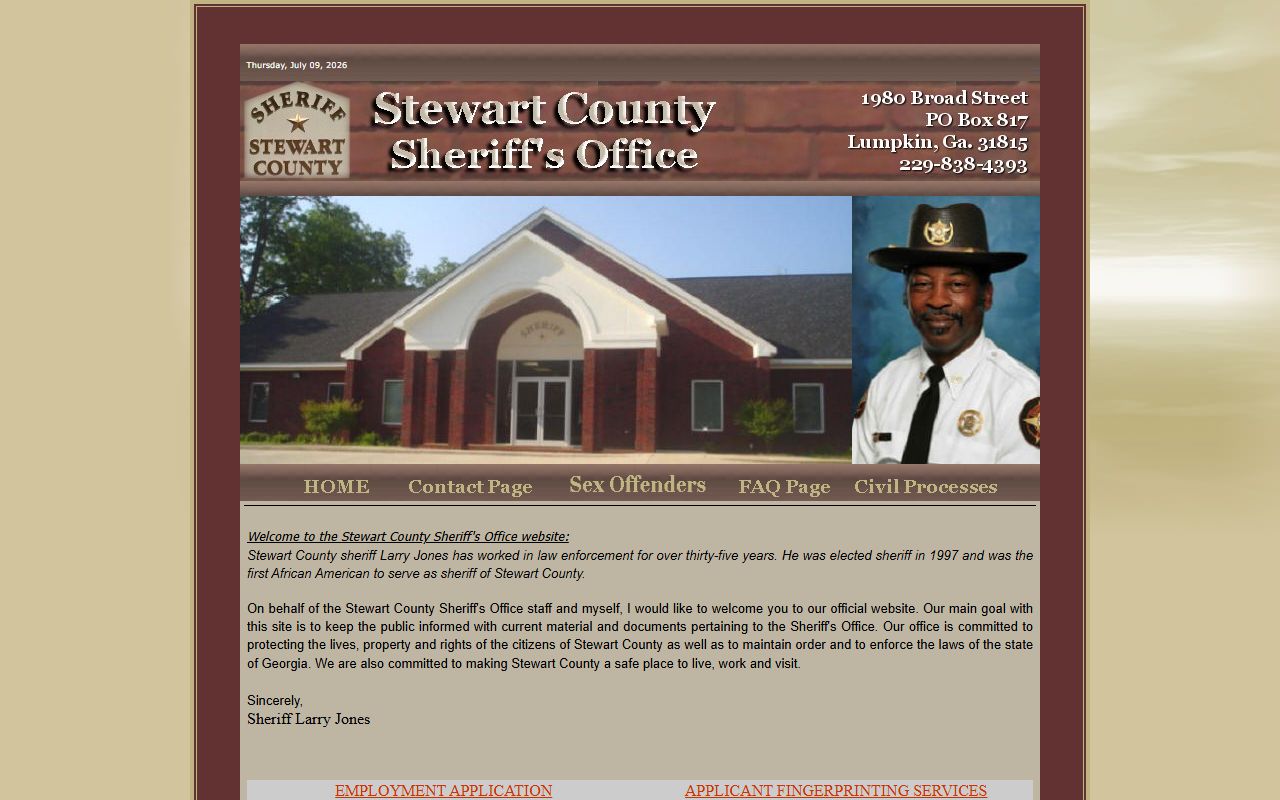
The Sheriff's Office site supports law-enforcement context, while case status, pleas, and sentences should still be verified through the court file.
Stewart County Criminal Case Flow
A Stewart County criminal court record grows as the case moves through court. Early entries may show charging papers or a bind-over from a lower court. The arraignment tells when the defendant was advised of the charges and entered a plea. Pretrial entries may show motions, continuances, discovery disputes, bond changes, or hearing dates. The record should then move toward a plea, trial, dismissal, or other disposition. If there is a conviction or plea, sentencing entries may show jail or prison time, probation, fines, fees, restitution, and conditions.
Case flow: Charges Filed › Arraignment › Pretrial › Plea or Trial › Disposition › Sentencing
| Stage | What Happens |
|---|---|
| Charges Filed | The prosecutor files an accusation or indictment, or the case reaches court after warrant or bind-over action. |
| Arraignment | The defendant is advised of the charges and enters a plea. |
| Pretrial | Motions, bond issues, discovery, continuances, and hearing settings are added to the docket. |
| Plea or Trial | The case resolves by negotiated plea, bench or jury trial, dismissal, or other court action. |
| Disposition | The court records the outcome of each charge or the whole case. |
| Sentencing | The sentence may include jail, prison, probation, fines, fees, restitution, credit, and conditions. |
What Stewart County Criminal Records Show
The criminal case file is broader than the charge record after arrest. A charge record can show the alleged offense, warrant or citation, arrest date, agency, bond, and initial court. A criminal court record can continue through pleas, motions, hearings, verdict, dismissal, disposition, sentencing, probation, and post-judgment events. That distinction is why a person comparing an arrest to the final outcome should check the full criminal court file and, when needed, the separate court charge records path.
| Field | What It Shows |
|---|---|
| Defendant Name | The person charged in the court case. |
| Charging Agency | The law-enforcement or prosecuting source tied to the charge when listed. |
| Indictment or Accusation Number | The charging-document identifier used in the prosecution. |
| Offense Description | The alleged crime, statute, and charge level when included in the record. |
| Bond | Release conditions or bond information entered in the court record. |
| Plea | The defendant's answer to a charge, such as guilty, not guilty, or nolo contendere if entered. |
| Disposition | The final outcome for a charge or case, such as guilty, dismissed, acquitted, or nolle prosequi. |
| Sentence | Jail, prison, probation, fines, fees, restitution, credit, and other ordered terms. |
Charges vs Convictions
A charge is an allegation. A conviction is a court outcome after a guilty plea, verdict, or other qualifying adjudication. Stewart County criminal court records may contain charges that were amended, reduced, dismissed, or not proven. A docket line showing an indictment or accusation should not be read as proof of guilt. The disposition and sentence entries are the parts of the case file that explain how the charge ended.
| Issue | Charge | Conviction |
|---|---|---|
| Meaning | An allegation that a criminal law was violated. | A court outcome after plea, verdict, or qualifying adjudication. |
| Case Stage | Appears early and may change. | Appears after the case is resolved. |
| Record Risk | Can remain visible even if later dismissed unless restricted. | May affect sentence, probation, driver record, custody, and future eligibility. |
| What to Verify | Charging paper and docket history. | Disposition, sentence sheet, and final order. |
The Georgia Department of Corrections offender query is useful for state-prison custody, not for proving every Stewart County criminal court disposition.
A GDC match may show post-sentence custody, while the Stewart County court file explains how the case reached that point.
Reading Criminal Dispositions
Disposition language is the key to Stewart County criminal court records. A guilty plea, guilty verdict, dismissal, acquittal, nolle prosequi, amendment, reduced charge, or probation disposition can lead to very different legal results. If a record lists several counts, read each count separately. One charge can be dismissed while another ends in a plea. Sentencing also should be read with care because probation, restitution, jail credit, fines, and suspended time may be shown in separate entries.
Victim and custody notification is a different channel. Georgia VINE advertises free, secure, confidential custody status and criminal-case information, with phone access at 1-833-216-6670.

VINE can help track custody or notification, but the court docket and final order remain the sources for disposition and sentence terms.
Sealed vs Restricted Records
Georgia often uses "record restriction" rather than expungement. A restricted Stewart County criminal court record may be limited for public or non-criminal-justice access, but courts, prosecutors, and law-enforcement agencies may retain access. Sealing can hide a court file or parts of a file from ordinary public inspection. Neither term should be treated as automatic destruction of every record.
| Issue | Sealed | Restricted |
|---|---|---|
| Public Visibility | Hidden from ordinary public inspection by court order or law. | Limited for non-criminal-justice dissemination when approved or authorized. |
| Who May Still See It | Court users or authorized persons may retain access. | Criminal-justice agencies may retain access in ways the public cannot see. |
| Georgia Basis | Depends on court order, statute, and case type. | Often analyzed under O.C.G.A. 35-3-37 and GBI guidance. |
| Practical Step | Ask the clerk whether an order controls access. | Identify arrest date, agency, charge, disposition, and prosecutor route. |
The GBI page for criminal-history record restrictions is one of the assigned criminal court records images.
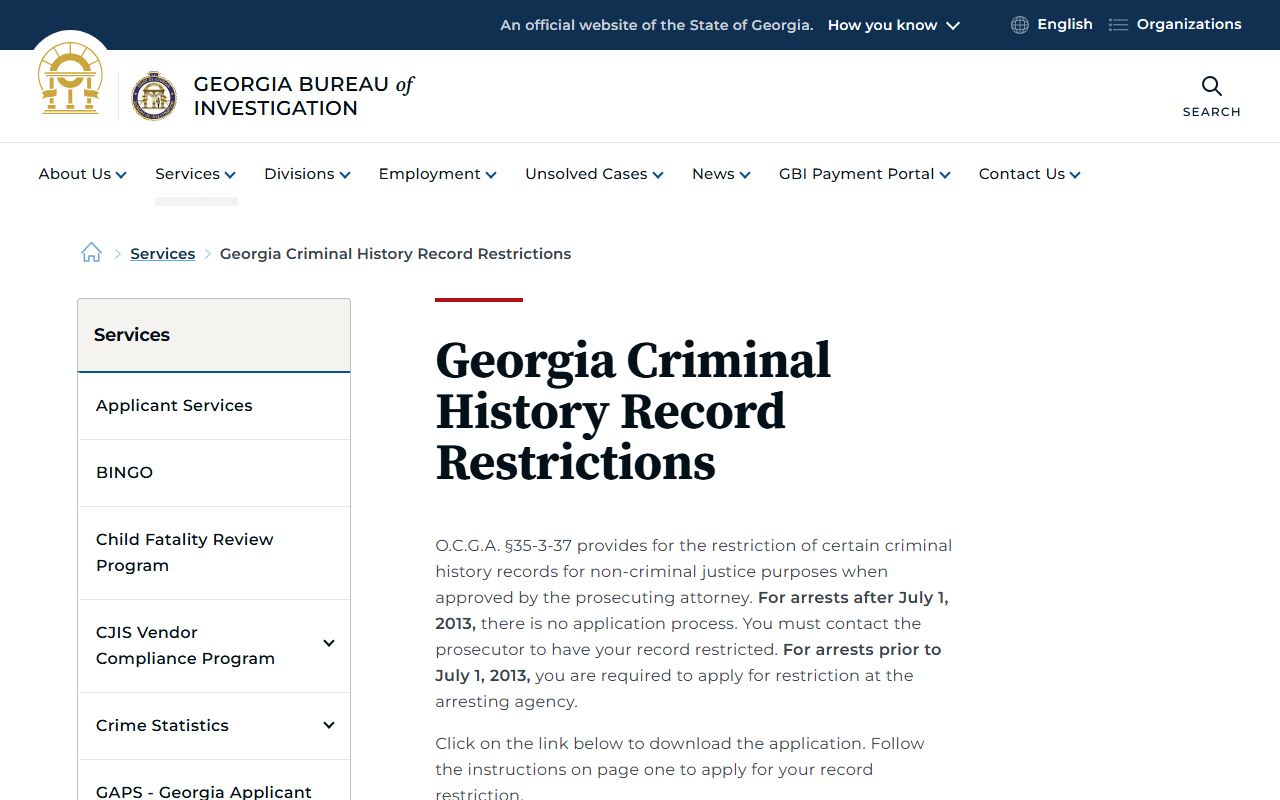
GBI guidance is important for criminal-history restriction, while court-file sealing and certified court copies still require court or clerk handling.
Public Access to Stewart Criminal Records
Georgia's open-records framework starts with access. O.C.G.A. 50-18-70 states a broad public-records policy and narrow construction of exceptions. O.C.G.A. 50-18-71 addresses inspection, copying, timing, and lawful fees. Stewart County's open-records form uses the three-business-day concept and lists copy, CD, postage, and labor fees for county agency records.
Court records still have distinct limits. Juvenile records are not ordinary public criminal court records. Adoption and mental-health materials are restricted. Personal identifiers should be redacted. A provider login can limit online review even when the record itself is generally public. Certified copies, older records, and sealed-file questions should be taken to the Clerk of Superior Court rather than guessed from an online snippet.
Key Statutes:
O.C.G.A. 35-3-37 governs Georgia criminal-history record restriction and sealing procedures for eligible records.
O.C.G.A. 15-10-2 includes Magistrate Court jurisdiction over arrest and search warrant applications.
State Systems and Criminal Cases
State systems can support a Stewart County criminal court records search, but they do not replace the court file. Georgia.gov's offender page explains that adult offenders in Georgia Department of Corrections facilities can be searched by name, ID or case number, age, and identifying information. GDC is most useful after a sentence sends a person to state custody. Georgia VINE can help with custody or criminal-case notification. The GBI sex-offender registry is statewide and is linked by the Stewart County Sheriff's Office, but it is a registry, not a full case docket.
The Georgia.gov find an offender service is assigned as a successful criminal records image source in the manifest.
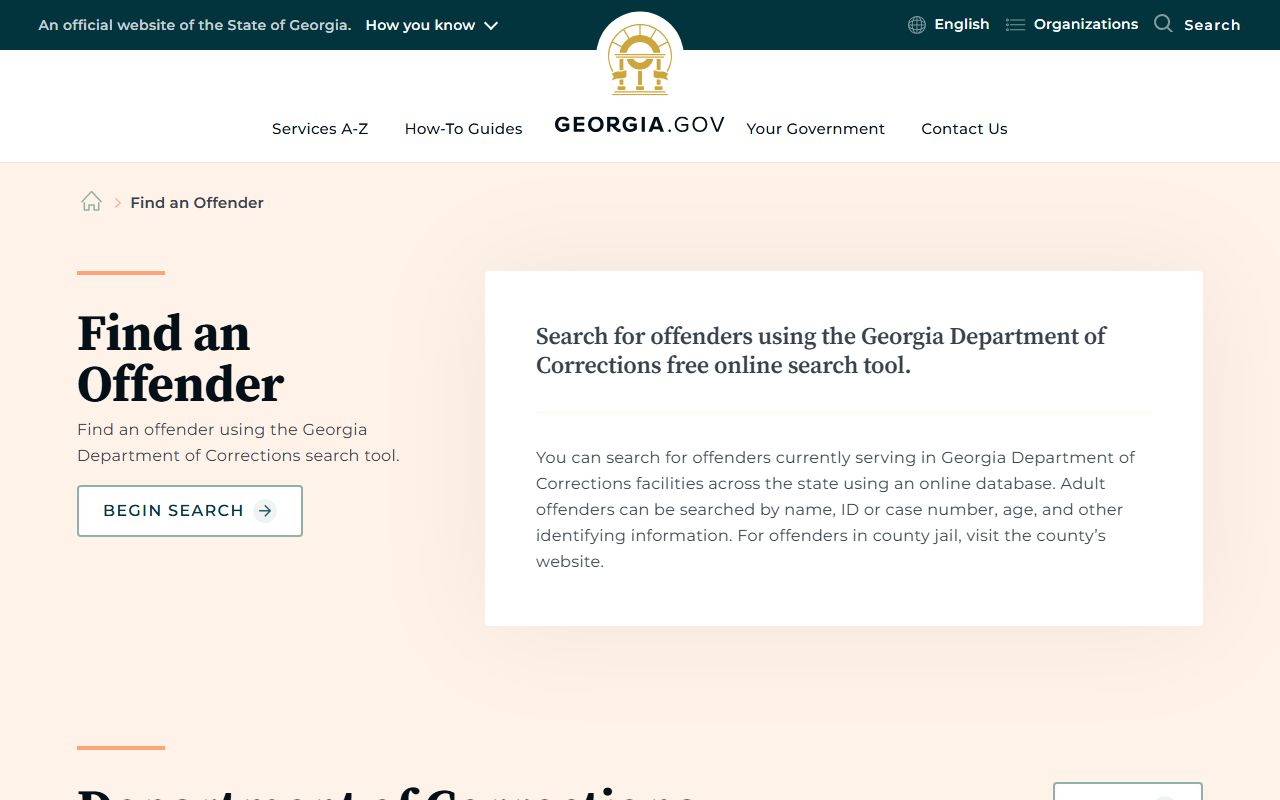
Use the state offender search for sentenced custody questions, then return to the Stewart County criminal court record for charges, plea, disposition, and sentence detail.
Restricted Stewart Criminal Court Records
Restricted criminal court records need careful routing. A person trying to restrict a Stewart County criminal record should identify the arresting agency, case number, court, charge, and disposition. GBI guidance says for arrests after July 1, 2013, non-conviction restriction often starts with the prosecutor rather than a GBI application. For arrests before that date, the route may begin with the arresting agency. In Superior Court matters, that usually means checking with the Southwestern Judicial Circuit prosecutor and the clerk before filing or relying on a record status.
Some conviction restriction and sealing requests require a court petition, waiting period, or eligibility review. No page, portal, or phone call should be treated as proof that every conviction can be hidden. If a record involves a municipal or probate traffic matter, first confirm which court and prosecutor handled the charge. After a restriction is approved, public dissemination may be limited, but criminal-justice users may still see information that the public cannot access.